
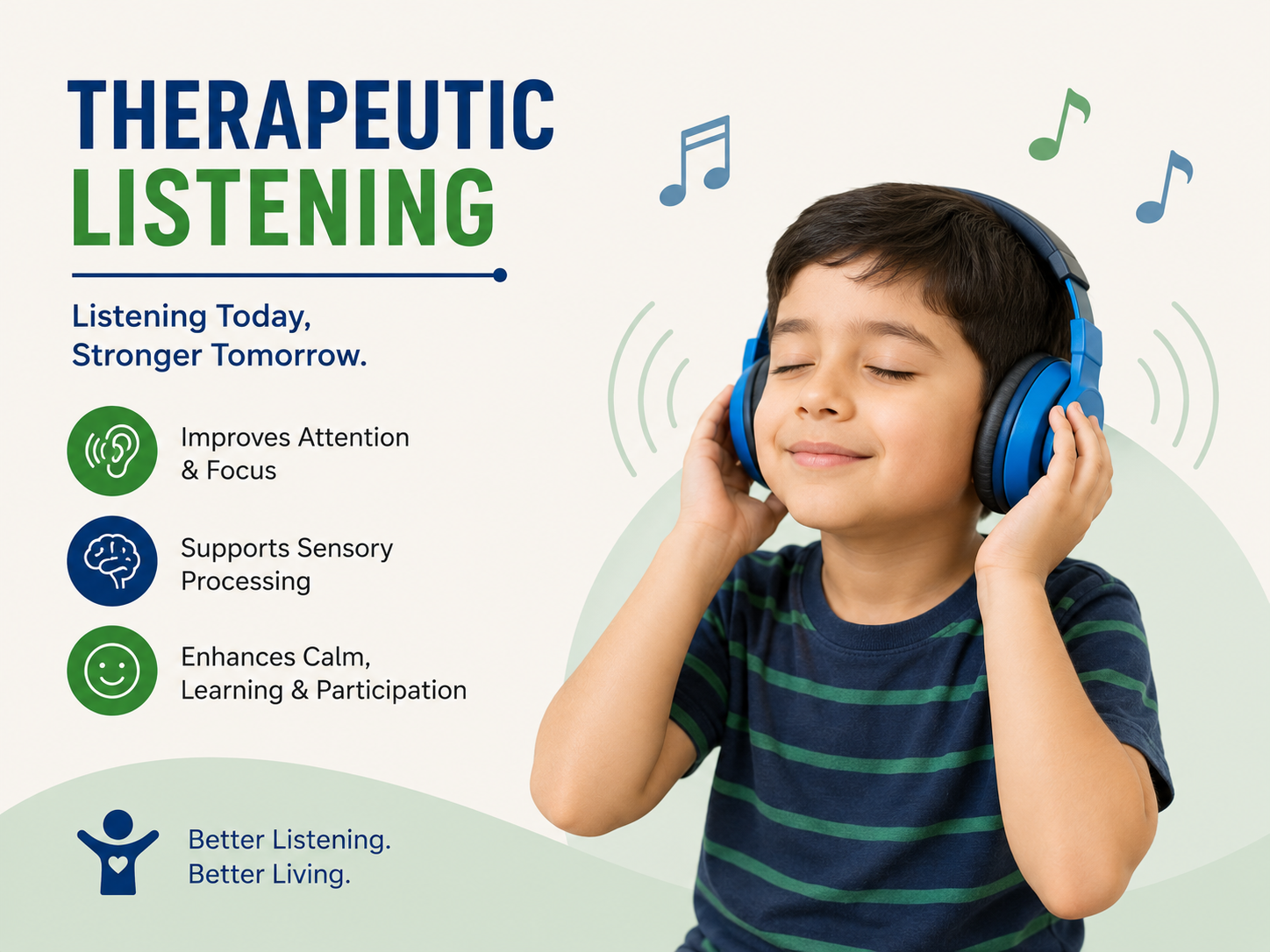
Therapeutic Listening: Supporting Sensory Processing, Attention and Everyday Function
Introduction
Children experience the world through their senses, and the way they process sounds can influence attention, movement, communication, behavior, and participation in everyday activities. Some children may become overwhelmed by certain sounds, have difficulty focusing on verbal instructions, or struggle to organize their responses to sensory information.
Therapeutic Listening® is a specialized sound-based intervention used within occupational therapy and sensory-based treatment programs. It uses specially modified music and individualized listening programs, often combined with movement and sensory activities, to support functional goals.
What Is Therapeutic Listening?
Therapeutic Listening is designed around the concept that listening involves more than simply hearing sounds. The approach combines specially processed music with sensory-motor activities to provide structured auditory and sensory experiences.
A trained therapist selects listening activities according to the individual's needs, responses, and therapy goals rather than using exactly the same program for every child
Who May Benefit from Therapeutic Listening?
Therapeutic Listening may be considered for children who experience challenges related to:
-
Attention and concentration
-
Following verbal directions
-
Sensory processing
-
Sensitivity to sounds
-
Self-regulation
-
Motor planning and coordination
-
Postural control
-
Fine-motor skills
-
Communication and social participation
-
Organization and transitions
-
Certain eating or sleeping difficulties
An occupational therapist should assess the child's individual needs before deciding whether Therapeutic Listening is appropriate.
How Does Therapeutic Listening Work?
Therapeutic Listening is generally incorporated into a broader therapy program.
1. Assessment
The therapist first evaluates the child's sensory processing, functional abilities, attention, movement, behavior, and everyday challenges.
2. Goal Setting
Specific goals are established based on the child's needs. These may relate to attention, self-regulation, motor skills, participation, or other functional activities.
3. Individualized Music Selection
Appropriate sound-based materials are selected according to the child's clinical profile and therapy goals. The program may change as the child progresses or responds to different listening selections. (Vital Links)
4. Listening and Sensory Activities
Listening may be combined with movement, play, postural activities, or other sensory-motor strategies. The objective is to connect the listening experience with meaningful functional activities.
5. Progress Monitoring
The therapist monitors the child's response and functional progress and adjusts the intervention when necessary.
Potential Benefits
When appropriately incorporated into a comprehensive therapy program, Therapeutic Listening may support areas such as:
-
Improved attention and focus
-
Better self-regulation
-
Improved response to verbal directions
-
Greater tolerance of certain sounds
-
Support for motor planning and coordination
-
Improved participation in therapeutic activities
-
Support for postural and fine-motor skills
-
Improved engagement in daily routines
Research on sound-based interventions is promising but remains limited and varied. A 2025 systematic review found preliminary evidence for improvements in some auditory, behavioral, and emotional outcomes, while also emphasizing the need for higher-quality research and more consistent outcome measures.
Therapeutic Listening and Occupational Therapy
Therapeutic Listening is often used as one component of occupational therapy, rather than as a standalone solution. It may be combined with sensory-motor activities, functional exercises, play, and strategies designed around the child's specific occupational goals.
The focus should always remain on meaningful improvements in everyday participation rather than simply completing listening sessions.
Role of Parents and Caregivers
Parents and caregivers can play an important role in supporting a child's therapy program. If a therapist recommends a home listening program, caregivers should follow the prescribed schedule, equipment instructions, and safety guidance.
Parents can also observe changes in attention, behavior, sensory responses, movement, communication, and participation and share these observations with the therapist.
Why Individualized Therapy Matters
Every child responds differently to sensory experiences. A listening program that may be appropriate for one child may not be appropriate for another.
For this reason, Therapeutic Listening should be selected and monitored by a suitably trained professional who can assess the child's needs and modify the program according to their response.
Conclusion
Therapeutic Listening is a specialized sound-based approach that can be incorporated into occupational therapy and sensory-motor intervention programs. By combining individualized auditory experiences with meaningful therapeutic activities, it may help support areas such as attention, self-regulation, sensory processing, coordination, and participation.
While current research provides encouraging preliminary findings, Therapeutic Listening should be viewed as one part of a comprehensive, individualized therapy program, rather than a guaranteed treatment for a particular condition. Professional assessment and ongoing monitoring are important for determining whether it is suitable for a child.
With the right support, every child can be encouraged to listen, engage, participate, and develop greater confidence in everyday life.