
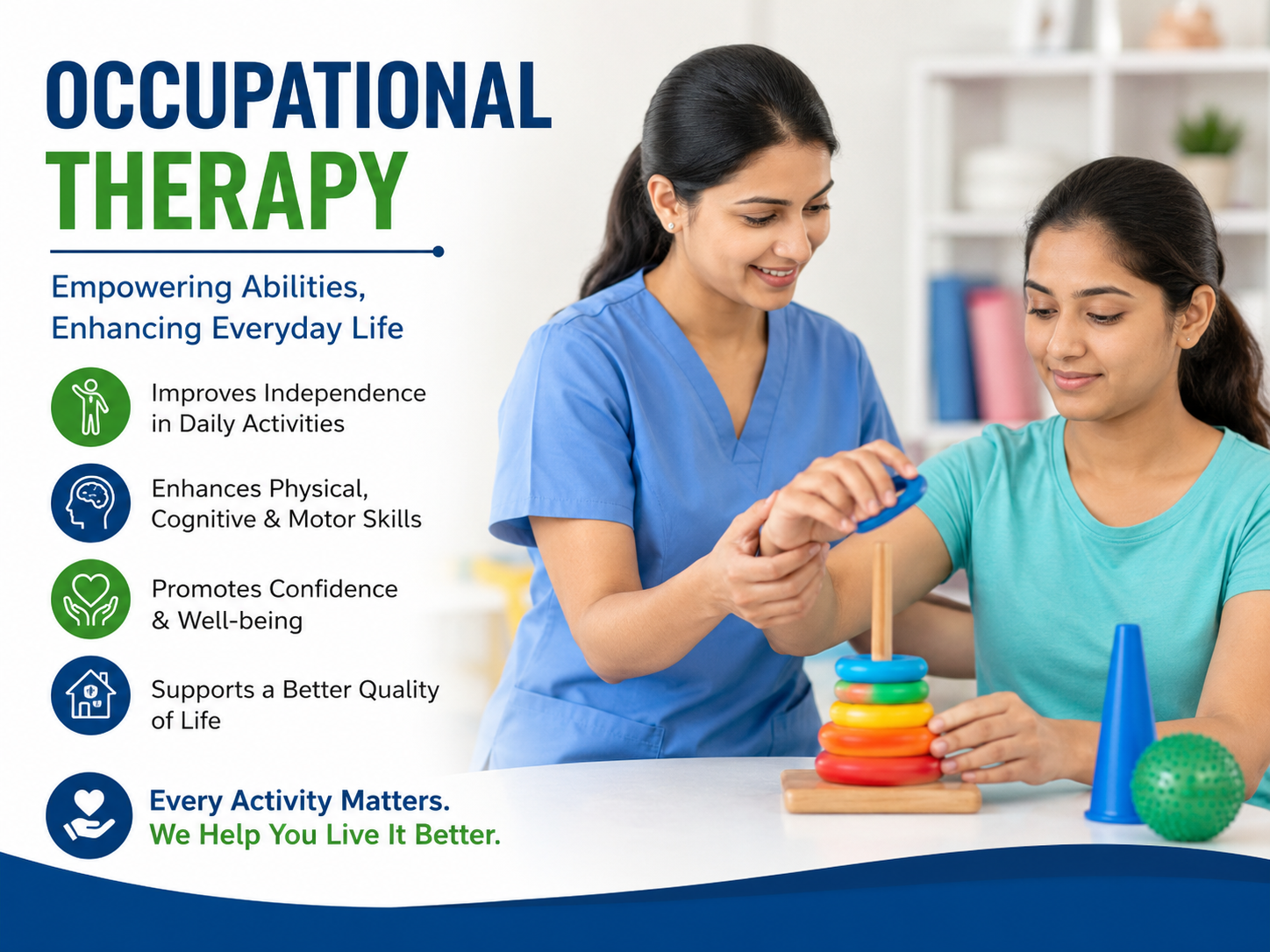
Occupational Therapy: Empowering People to Live More Independent Lives
Introduction
Occupational Therapy (OT) is a specialized healthcare service that helps people participate in the everyday activities that are important to them. These activities, often called “occupations,” include personal care, studying, working, playing, household tasks, social activities, and other routines of daily life.
Occupational therapists work with people of different ages who may have difficulties performing everyday activities because of injury, illness, disability, developmental challenges, neurological conditions, or age-related changes. The goal is not simply to treat a condition, but to help individuals become more independent, confident, and active in daily life.
What Is Occupational Therapy?
Occupational Therapy focuses on improving a person's ability to perform meaningful daily activities. An occupational therapist evaluates an individual's physical, cognitive, emotional, sensory, and functional abilities and develops a personalized therapy program.
Depending on the person's needs, therapy may focus on improving:
- Fine and gross motor skills
- Hand and eye coordination
- Balance and mobility
- Strength and flexibility
- Memory and concentration
- Sensory processing
- Self-care and personal hygiene
- Communication and social participation
- School and work-related skills
- Independence in daily activities
Who Can Benefit from Occupational Therapy?
Occupational Therapy can benefit children, adults, and older adults with a wide range of conditions.
Children
Children may benefit from OT when they experience difficulties with:
- Writing, drawing, or holding a pencil
- Concentration and classroom activities
- Fine motor skills
- Sensory processing
- Dressing, eating, and other self-care activities
- Coordination and balance
- Developmental milestones
- Playing and interacting with others
Occupational therapists can create fun, activity-based interventions that help children develop important skills while making therapy engaging and motivating.
Adults
Adults may require Occupational Therapy following an injury, illness, surgery, or neurological condition. OT can help individuals regain independence in activities such as dressing, bathing, cooking, working, and managing household responsibilities.
It may be useful for people recovering from conditions such as stroke, neurological disorders, orthopedic injuries, or other situations that affect daily functioning.
Older Adults
For older adults, Occupational Therapy can support independence and safety at home. Therapists may recommend exercises, adaptive techniques, assistive devices, and environmental modifications to make daily activities easier and safer.
How Does Occupational Therapy Work?
The first step is usually a detailed assessment of the individual's abilities and challenges. The occupational therapist then develops an individualized treatment plan based on the person's goals.
Therapy may include:
-
Assessment – Identifying difficulties affecting daily activities.
-
Goal Setting – Establishing realistic and meaningful functional goals.
-
Therapeutic Activities – Using exercises and practical activities to improve skills.
-
Functional Training – Practicing real-life activities such as dressing, eating, writing, or working.
-
Adaptive Strategies – Teaching alternative ways to complete challenging tasks.
-
Home Programs – Providing activities and recommendations that can be continued at home.
-
Progress Monitoring – Regularly evaluating improvement and adjusting the therapy plan.
Benefits of Occupational Therapy
Occupational Therapy can provide several important benefits, including:
- Greater independence in daily activities
- Improved strength, coordination, and motor skills
- Better concentration and cognitive abilities
- Improved confidence and self-esteem
- Enhanced participation in school and work
- Better sensory regulation
- Increased safety at home and in the community
- Improved quality of life
One of the most important aspects of OT is that treatment is focused on real-life goals. Instead of concentrating only on physical improvements, therapists aim to help people use those improvements in meaningful everyday situations.
Occupational Therapy and Rehabilitation
Occupational Therapy is an important part of rehabilitation. It can work alongside physiotherapy, speech therapy, psychology, and other healthcare services when a person requires multidisciplinary care.
For example, after a stroke, physiotherapy may focus on mobility and physical strength, while occupational therapy may help the person relearn activities such as dressing, eating, writing, or using household objects.
Conclusion
Occupational Therapy is about helping people participate in the activities that matter most to them. Whether it is helping a child develop classroom skills, assisting an adult in returning to work, or supporting an older person in maintaining independence, OT takes a personalized and practical approach to rehabilitation.
With appropriate assessment, therapy, guidance, and consistent practice, Occupational Therapy can help individuals overcome functional challenges and achieve greater independence and confidence in everyday life.
If you or someone you know is experiencing difficulty performing daily activities, consulting a qualified occupational therapist can be an important step toward improving functional independence and quality of life.