
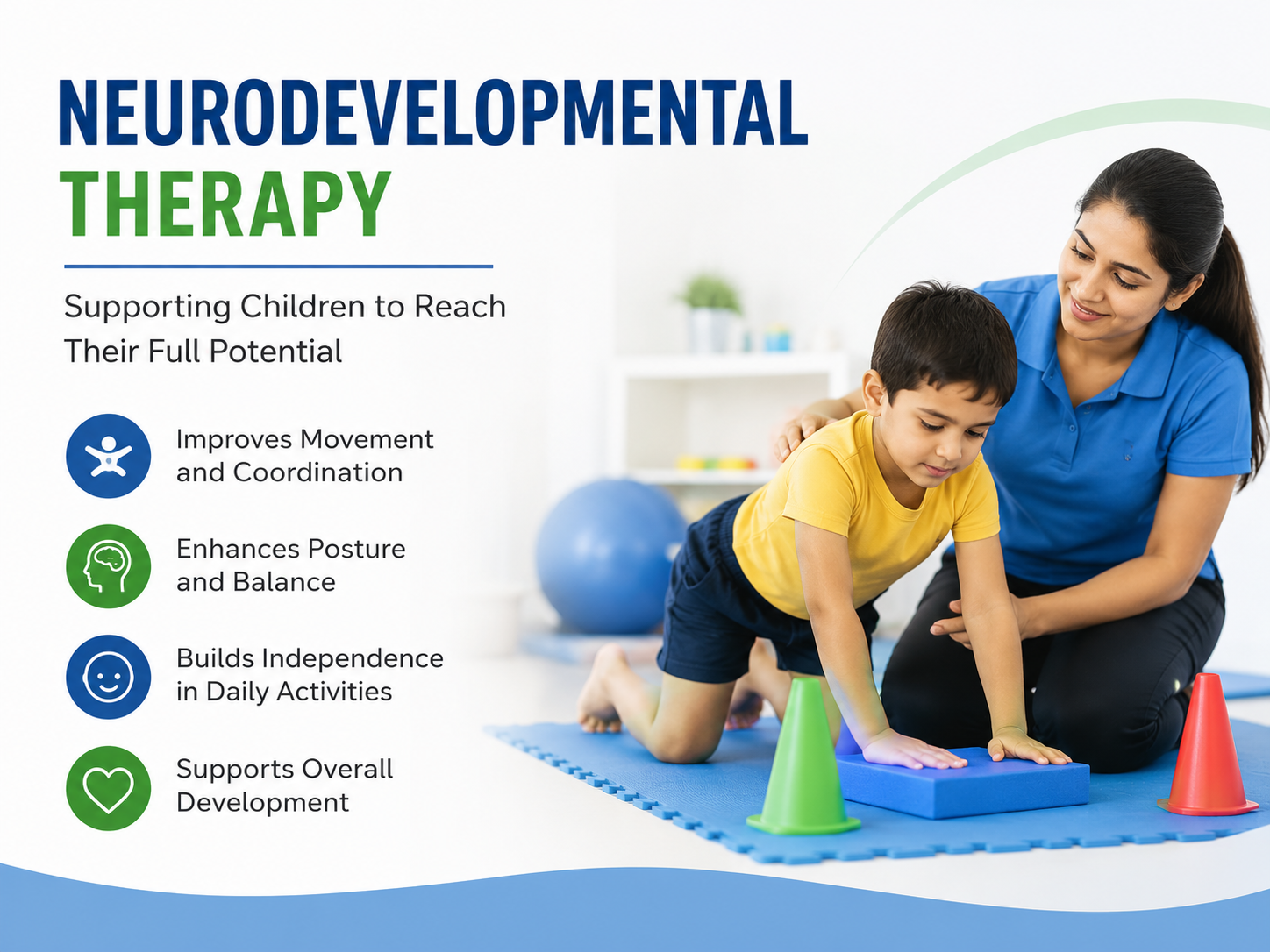
Neurodevelopmental Therapy: Supporting Children to Reach Their Full Potential
Introduction
Every child develops at their own pace, but some children may experience difficulties with movement, balance, coordination, posture, or everyday activities. These challenges can affect their ability to play, learn, communicate, and participate independently in daily life.
Neurodevelopmental Therapy (NDT) is a child-centered therapeutic approach that focuses on improving movement, posture, coordination, and functional abilities. The aim is to help children develop useful skills and become more independent in their everyday activities.
What Is Neurodevelopmental Therapy?
Neurodevelopmental Therapy focuses on understanding how a child's nervous system, muscles, posture, and movement work together. Therapy uses carefully planned activities and therapeutic techniques to encourage better movement patterns and functional skills.
Rather than focusing only on a specific symptom, the therapist considers the child's overall abilities, developmental stage, environment, and individual goals.
Who Can Benefit from Neurodevelopmental Therapy?
NDT may be considered for children experiencing developmental or neurological challenges, including children with:
- Developmental delays
- Cerebral palsy
- Down syndrome
- Neurological conditions
- Motor coordination difficulties
- Muscle tone abnormalities
- Balance and postural difficulties
- Difficulties with gross motor development
- Challenges performing age-appropriate physical activities
A qualified therapist should assess each child individually to determine whether this approach is appropriate.
Goals of Neurodevelopmental Therapy
The goals of therapy depend on the child's individual needs. Common goals may include:
Improving Posture and Balance
Good posture and balance provide a foundation for movement. Therapy may use positioning and functional activities to help children develop better postural control.
Enhancing Movement and Coordination
Children may practice movements that involve reaching, sitting, standing, walking, transferring, and other functional activities.
Developing Motor Skills
Therapy can support the development of gross and fine motor abilities that children use during play, school activities, and daily routines.
Increasing Independence
One of the key goals is helping children use their abilities in meaningful everyday activities, such as dressing, playing, moving around, and participating in school routines.
Supporting Functional Participation
Therapy focuses on skills that can help children participate more actively at home, at school, and in their community.
How Does Neurodevelopmental Therapy Work?
A typical therapy program may involve several stages:
1. Assessment
The therapist evaluates the child's movement, posture, muscle tone, balance, coordination, developmental skills, and functional abilities.
2. Individualized Goal Setting
Specific goals are developed according to the child's age, abilities, challenges, and everyday needs.
3. Therapeutic Intervention
The therapist uses appropriate exercises, positioning, handling techniques, play-based activities, and functional tasks to encourage improved movement and participation.
4. Family Involvement
Parents and caregivers are guided on how to support the child's development and practice appropriate activities at home.
5. Progress Monitoring
The child's progress is regularly reviewed, and the therapy plan may be adjusted according to changing needs and abilities.
Benefits of Neurodevelopmental Therapy
With an individualized therapy program, children may experience improvements in:
- Posture and body control
- Balance and coordination
- Gross motor skills
- Functional movement
- Mobility and independence
- Participation in play and daily activities
- Confidence and self-esteem
- Overall quality of life
The extent of improvement varies from child to child and depends on several factors, including the underlying condition, developmental stage, consistency of therapy, and individual response to intervention.
Importance of Early Intervention
Early identification and appropriate intervention can be valuable when a child is experiencing developmental difficulties. Addressing functional challenges early may provide opportunities to practice important skills during key stages of development.
Parents should discuss developmental concerns with a qualified pediatrician or therapist rather than waiting for difficulties to resolve on their own.
Role of Parents and Caregivers
Parents play an important role in a child's therapeutic journey. Consistent support at home can help children practice skills in familiar environments.
Simple activities recommended by the therapist can often be incorporated into everyday routines, playtime, and family activities. A positive and encouraging environment can also help children remain motivated.
Neurodevelopmental Therapy: A Child-Centered Approach
Every child is unique. Therefore, therapy should be designed around the child's individual strengths, challenges, interests, and goals.
The ultimate objective is not simply to improve a particular movement but to help the child use their abilities in meaningful everyday activities.
Conclusion
Neurodevelopmental Therapy can play an important role in supporting children who experience difficulties with movement, posture, coordination, balance, or functional development.
Through individualized assessment, therapeutic activities, family involvement, and regular progress monitoring, therapy aims to help children develop functional abilities and participate more confidently in everyday life.
Every child has the potential to learn, grow, and develop. The right support can help them take meaningful steps toward greater independence and participation.