
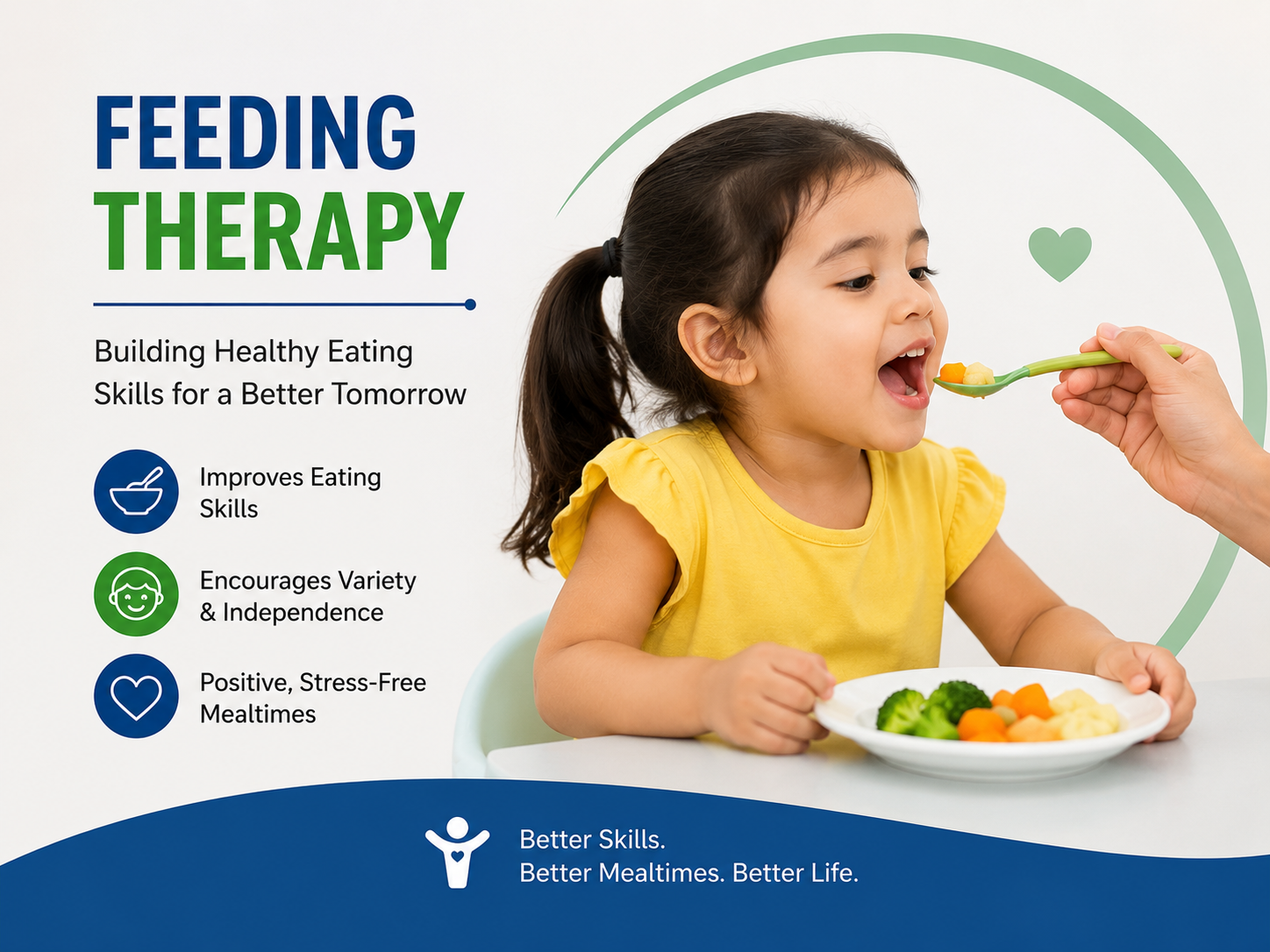
Feeding Therapy: Helping Children Develop Healthy and Independent Eating Skills
Introduction
Feeding is an essential part of everyday life, but for some children, eating and drinking can be challenging. Difficulties may include refusing foods, having a very limited diet, struggling with chewing or swallowing, or becoming upset by certain textures, tastes, smells, or temperatures.
Feeding Therapy is a specialized intervention designed to help children develop safe, comfortable, and functional eating and drinking skills. It focuses on the underlying reasons for feeding difficulties and uses individualized strategies to make mealtimes more successful and less stressful.
What Is Feeding Therapy?
Feeding Therapy helps children improve their ability to eat and drink safely and appropriately. A qualified therapist evaluates the child's feeding behavior, oral-motor skills, sensory responses, nutritional habits, and mealtime routines.
Depending on the child's needs, therapy may focus on:
-
Improving chewing and swallowing skills
-
Developing oral-motor coordination
-
Increasing acceptance of different foods
-
Reducing food refusal
-
Managing sensitivity to food textures
-
Improving drinking skills
-
Developing age-appropriate feeding behaviors
-
Making mealtimes more positive and comfortable
Who May Benefit from Feeding Therapy?
Feeding Therapy may be helpful for children who experience difficulties such as:
Picky or Selective Eating
Some children eat only a very small number of foods or strongly prefer specific brands, textures, colors, or presentations. Feeding therapy can gradually introduce new foods in a supportive environment.
Difficulty Chewing
Children may struggle to chew foods effectively or may avoid foods that require more chewing. Therapy can help develop the oral-motor skills needed for efficient eating.
Food Refusal
Repeated refusal of meals or particular food groups can make mealtimes stressful for both children and parents. A therapist can identify possible contributing factors and develop appropriate strategies.
Sensory-Based Feeding Difficulties
Some children are extremely sensitive to the smell, appearance, texture, temperature, or taste of food. Feeding therapy may use gradual sensory exposure to help children become more comfortable with different foods.
Difficulty with Drinking
Some children may have difficulty drinking from a cup, straw, or other age-appropriate drinking methods. Therapy can help develop the coordination and skills needed for safer and more independent drinking.
How Does Feeding Therapy Work?
Every child is different, so feeding therapy is personalized according to the child's needs and abilities.
1. Comprehensive Assessment
The therapist observes the child's eating and drinking patterns and identifies possible sensory, oral-motor, behavioral, or environmental factors affecting feeding.
2. Individualized Goals
Specific goals are established based on the child's current abilities. These may include accepting new foods, improving chewing, increasing food variety, or improving independence during meals.
3. Skill Development
Therapy may include age-appropriate activities designed to improve oral-motor coordination, chewing, swallowing, hand-to-mouth skills, and other feeding-related abilities.
4. Gradual Food Introduction
New foods can be introduced gradually rather than forcing a child to eat unfamiliar foods. The therapist may work on tolerating, touching, smelling, tasting, and eventually eating new foods.
5. Parent and Caregiver Guidance
Parents and caregivers play an important role in feeding progress. Therapists may provide practical strategies that can be incorporated into daily mealtimes at home.
Benefits of Feeding Therapy
With an individualized approach, Feeding Therapy may help children:
-
Expand their food variety
-
Develop better chewing and oral-motor skills
-
Improve acceptance of new foods
-
Become more comfortable with different textures
-
Develop greater independence during meals
-
Improve mealtime participation
-
Reduce stress around eating
-
Develop safer and more effective feeding habits
The goal is not simply to make a child eat more food. The focus is on developing safe, functional, and positive feeding skills that support the child's overall development and well-being.
Creating a Positive Mealtime Environment
Parents can also support healthy feeding habits by creating a calm and positive mealtime environment. Avoiding pressure and allowing children appropriate opportunities to explore food can make meals more comfortable.
Consistent routines, age-appropriate portions, positive encouragement, and patience can also support progress. However, persistent feeding difficulties should be evaluated by an appropriately qualified healthcare professional.
Feeding Therapy and Multidisciplinary Care
Feeding difficulties can sometimes involve multiple factors. Depending on the child's needs, Feeding Therapy may be provided as part of a multidisciplinary approach involving occupational therapists, speech and language therapists, pediatricians, dietitians, psychologists, and other healthcare professionals.
Collaboration can help ensure that the child's feeding, developmental, nutritional, sensory, and communication needs are addressed appropriately.
Conclusion
Feeding difficulties can affect not only what a child eats but also family routines, mealtime experiences, and the child's confidence and independence.
Feeding Therapy provides individualized support to help children develop better eating and drinking skills in a safe and supportive environment. With appropriate assessment, professional guidance, patience, and consistent practice, many children can make meaningful progress toward more comfortable and independent mealtimes.
If your child frequently refuses food, has a very limited diet, struggles with chewing or swallowing, or experiences significant distress during meals, consider discussing these concerns with a qualified healthcare professional to determine whether a feeding assessment may be appropriate.